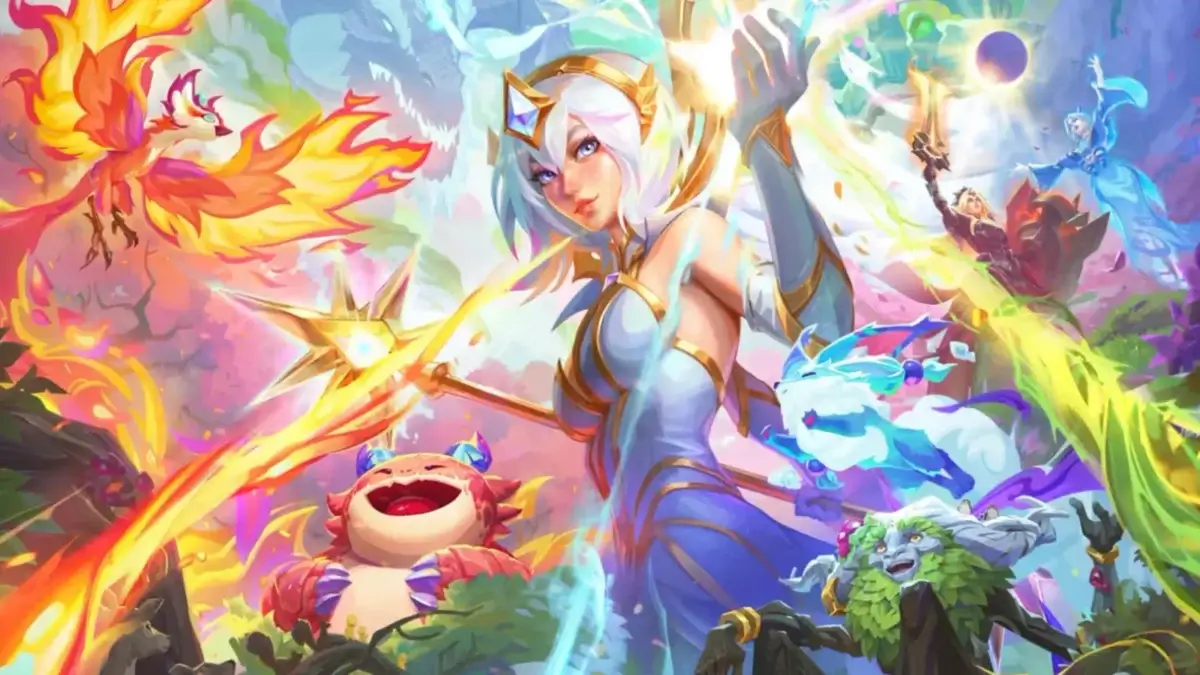

Riot Games has shared its first detailed look at TFT Enchanted Wilds, the next full Teamfight Tactics set. The new theme moves away from the cosmic setting of Space Gods and into a forest packed with magical creatures, familiar champions, and several unconventional traits.
The initial overview covers the new set mechanic, many of the largest vertical traits, and several five-cost units. However, Riot has warned that the numbers and effects shown during the PBE period may change before the full launch.
When Does TFT Enchanted Wilds Come Out?
TFT Enchanted Wilds launches on August 26, 2026, alongside Patch 18.1.
The set is officially identified as TFT Set 18. Riot has also released a PBE rundown, giving players an early chance to test its champions, traits, Augments, and central mechanic before the live update arrives.
Enchanted Wilds replaces Space Gods as the main TFT set. Riot has not published the complete Patch 18.1 notes yet, so exact balance values may differ by launch.
Wisps Are the Main Enchanted Wilds Mechanic
Wisps are an updated version of the Charms system introduced in Set 12, Magic n’ Mayhem.
They appear inside the shop as temporary, single-use purchases. A Wisp may provide combat power, gold, experience, items, shop changes, champion effects, or a riskier deal with an unpredictable outcome. Players can normally purchase one Wisp per round, and they appear in every other shop.
Riot has divided Wisps into seven categories:
- Champion
- Combat
- Miscellaneous
- Shop
- Gold and XP
- Risky
- Item
Each category uses its own color and icon. The selected icon also appears near the player’s Tactician Health bar, which should make scouting opposing Wisp effects easier.
Wisps can only be purchased during the planning phase. Once that phase ends, the Wisp disappears and reveals the champion hidden behind it in the shop slot. After Stage 5, every other Wisp is guaranteed to be a Combat Wisp. Riot says this should make late-game searches for immediate power less dependent on luck.
Blossom Builds Directly Around Wisps
Blossom is one of the largest vertical traits in Enchanted Wilds. Its roster includes Karma, Yorick, Yunara, Master Yi, Ahri, Sett, Ashe, and Lux.
Blossom champions gain Attack Damage, Ability Power, and maximum Health. The trait also improves the Wisp system as players reach higher breakpoints.
At three Blossom, Wisps become upgraded. Five Blossom places a Wisp in every shop, while seven grants gold after buying one. Nine Blossom allows two Wisp purchases per round.
The final 11 Blossom breakpoint causes Wisps to overflow with power. Riot has not fully explained that final effect, and the current trait values remain subject to testing.
Ahri returns as a four-cost caster with a large Spirit Bomb attack. Sett is another four-cost Blossom champion. His ability heals him before dealing physical damage, while dropping below 40% Health immediately grants him 100 Mana once per combat.
Riftbeast Brings Jungle Monsters to TFT
Riftbeast turns monsters from the Summoner’s Rift jungle into playable TFT champions.
The trait includes Cinderling, Pebbles, Murkwolf, Gromp, Scuttlecrab, Mama Beak, Krug, Brambleback, Sentinel, and Elder Dragon. Players use an Alpha Mark to grant one Riftbeast a unique bonus.
Marking a carry can create a powerful damage dealer. Meanwhile, placing the Alpha Mark on certain tanks may provide support for the entire team.
At five Riftbeast, a future shop periodically fills with Riftbeast units. At seven, the team grows and gains stats at the start of combat and every five seconds. The 10 Riftbeast breakpoint adds one to the player’s maximum team size.
Elder Dragon occupies two board spaces and contributes two points toward the Riftbeast trait. It uses cleaving attacks, a board-wide stun, and an execution effect against enemies with low Health when Alpha Marked.
Coven Is the New High-Risk Economy Trait
Coven gathers Essence by defeating enemy champions and losing player combats.
At each Essence breakpoint, players choose between accepting a reward or continuing to build toward a larger cashout. Adding more Coven champions increases the rate at which Essence is collected.
The trait has similarities to previous loss-streak economy options such as Heartsteel. However, Riot says Coven should be less punishing when a player unexpectedly wins and breaks the streak.
Its roster includes Camille, Caitlyn, Elise, Cassiopeia, Morgana, and Lux. The largest breakpoint continually grants loot after every combat.
Elderwood Creates Placeable Plants
Elderwood returns with a new focus on summoning and board positioning.
The trait grants plants that can be moved around the board. Each one fills a different role, creating more positioning decisions than a standard summon trait.
Three Elderwood provides a Stonebark Tree and a Lifebloom. Five adds another Stonebark Tree, while seven unlocks the Deepwood Protector. The plants reach two-star quality at nine Elderwood and three-star quality at 11.
The Elderwood roster includes Xayah, Ornn, Alistar, LeBlanc, Hecarim, Ezreal, Gnar, and Lux.
Riot expects the trait to support several styles of play. Possible approaches include rerolling Alistar and LeBlanc, pairing Ezreal with Inferno and Executioner units, or building a late-game board around Gnar.
Sprykin Lets Champions Ride a Big Furry Friend
Sprykin uses one of the stranger mechanics in Enchanted Wilds.
Players can place a Yordle or Rammus onto the Big Furry Friend, granting the rider additional Health and Attack Speed. A Sprykin Emblem lets other champions use the mount as well.
At five Sprykin, part of the mount’s bonus applies to the full team. Seven Sprykin increases the portion granted to Sprykin champions.
The roster includes Kobuko, Veigar, Teemo, Tristana, Rammus, and Gnar. Teemo’s Fungus Among Us ability can forage for special mushrooms that provide rerolls, Tactician Health, or experience.
Blackthorn Sacrifices an Ally for Power
Blackthorn places one allied unit on a special hex and sacrifices it at the beginning of combat.
The remaining Blackthorn champions receive bonuses based on the sacrificed unit’s role, cost, and star level. At six Blackthorn, the mechanic reverses. The selected champion survives and receives Attack Damage, Ability Power, Attack Speed, defenses, Health, and Omnivamp instead.
Rek’Sai, Veigar, Warwick, Azir, and Malphite make up the current Blackthorn roster.
Azir is a three-cost champion with Blackthorn, Executioner, and Summoner. Riot expects those three traits to give him considerable potential as a reroll carry.
Lux Returns as the Avatar
Lux appears throughout the Enchanted Wilds trait list because her Avatar mechanic gives her one of several possible Origins.
Each Lux provides two points toward her displayed Origin. Her laser also gains a secondary effect based on the version found in the shop.
Possible Lux Origins include:
- Blackthorn
- Blossom
- Coven
- Elderwood
- Fae
- Inferno
- Lunar
- Primal
- Solar
For example, Blackthorn Lux stuns enemies struck by her laser. Elderwood Lux increases the maximum Health of allies after casting, while Coven Lux permanently reduces the Armor and Magic Resistance of affected enemies for the rest of the combat.
Once a player purchases Lux, other players cannot see which Origin variant they own. Finding a different version requires selling the current Lux first, although Riot says these distribution rules may change during testing.
Enchanted Wilds Includes Several Unusual Five-Cost Units
Ivern creates a biome by collecting seeds whenever he casts. The resulting board can become a forest, bog, canyon, waterfall, creek, or mountainside.
Different terrain hexes provide Health, Armor and Magic Resistance, Mana regeneration, Attack Speed, or damage amplification. The final planted hex is always the God-Willow at the center of the board.
Maokai and Taric provide two late-game frontline options. Maokai gains maximum Health as nearby enemies fall, while Taric pairs with an ally and protects both units when either drops below half Health.
Draven operates through the Bounty Seeker trait. After adding him to the board, players choose from three objectives. Completing a harder bounty provides a stronger reward, with possible requirements based on attacks, damage, casts, kills, or survival.
More Enchanted Wilds Details Are Still Coming
Riot’s first overview does not cover every trait, champion, Augment, or Legendary unit in Set 18. Primal, Rivals, Lunar, Solar, and several other parts of the set remain available for later breakdowns.
The developer also emphasized that all current numbers may change during PBE testing. That includes trait breakpoints, champion damage, Wisp effects, and bounty rewards.
TFT Enchanted Wilds launches with Patch 18.1 on August 26. Until then, the PBE period will give Riot time to adjust its more ambitious mechanics before Wisps, Riftbeasts, Avatar Lux, and the rest of the forest reach live servers.