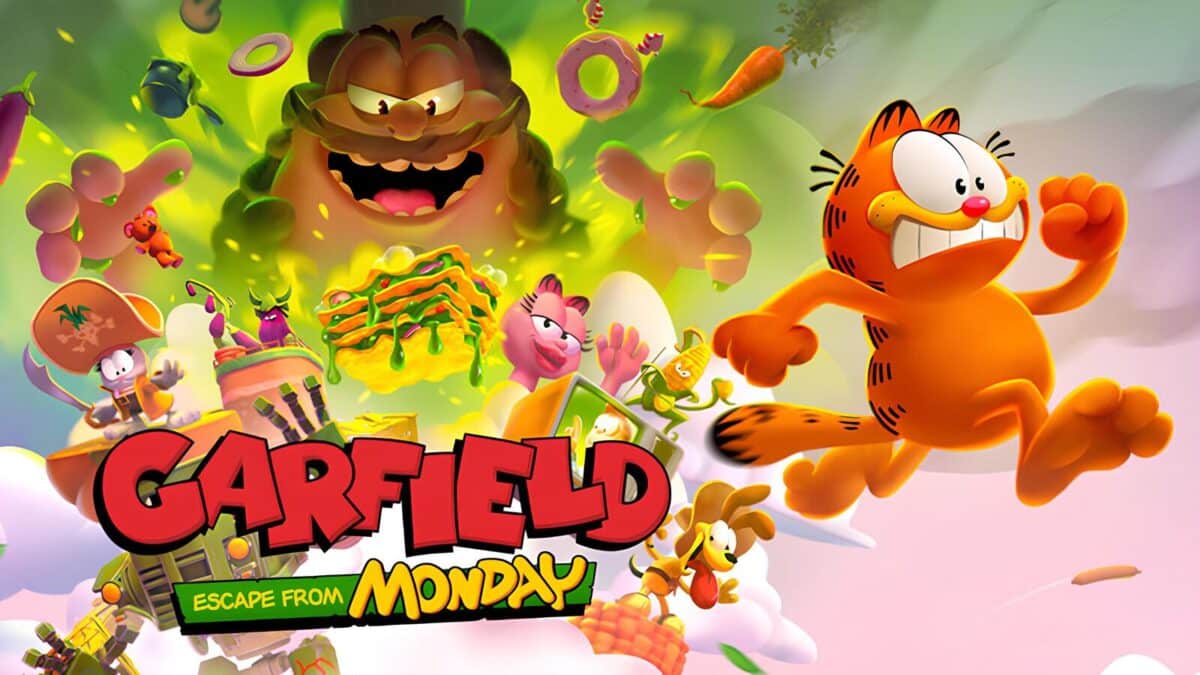

Garfield probably would not be my first choice for the star of a 3D platformer. Running, jumping, wall sliding, and fighting food-themed enemies sounds like far too much effort for a cat who would rather be eating lasagna. Garfield – Escape from Monday knows that and has plenty of fun putting him through it anyway.
The setup sends Garfield into Dreamland after he encounters the ultimate insult: lasagna covered in vegetables. Chef Monday then spends the game making his life increasingly difficult while Jon helps him through the chaos.
What surprised me most is how solid the platforming feels. Garfield controls extremely well, his movement kit gives you plenty to work with, and Dreamland gradually introduces new themes and platforming ideas without becoming overly difficult.
Well, except for the camera.
Garfield Feels Surprisingly Good to Control
The best thing Garfield – Escape from Monday has going for it is simply controlling Garfield.
His basic moves include a jump, dash, melee attack, ground slam, wall slide, and ground roll. Some moves also flow into others. A ground slam, for example, can launch Garfield into a higher jump.
The wall slide is a particularly fitting touch. Garfield digs his claws into a wall and slowly slides down, giving a familiar platforming mechanic a little personality.
I played with both mouse and keyboard and a controller on my Steam Deck, and the controls felt tight with either setup. Whenever I missed a platform or took damage, I usually knew exactly what I had done wrong.
I never found myself blaming slippery physics, delayed inputs, or Garfield deciding to go somewhere other than where I told him.
That solid movement becomes even more important once the levels start mixing his abilities together. Stages combine spinning platforms, wall jumps, dashes, enemies, moving obstacles, and collectible hunting without requiring the kind of precision that turns every missed jump into an ordeal.
Most levels are also fairly short. There are longer ones, but I rarely feel like I need to plan around starting another stage.
Costumes Add More Movement Options

Garfield’s normal movement kit is already strong, but special constumes give certain levels their own mechanics.
The first I encountered was the turkey custome, which lets Garfield repeatedly flap through the air while still using his dash for extra distance and momentum.
Think Flappy Bird, except Garfield is somehow the bird.
The game even commits to the joke with a Flappy Cat stage, which has been one of my favorites. It was also one of the trickier stages when trying to collect every lasagna since it is easy to overshoot something while keeping Garfield airborne.
The adventure also introduces surfer and cowboy costumes later on, so Garfield continues gaining new movement options beyond the turkey suit.
Dreamland Keeps Changing the Formula
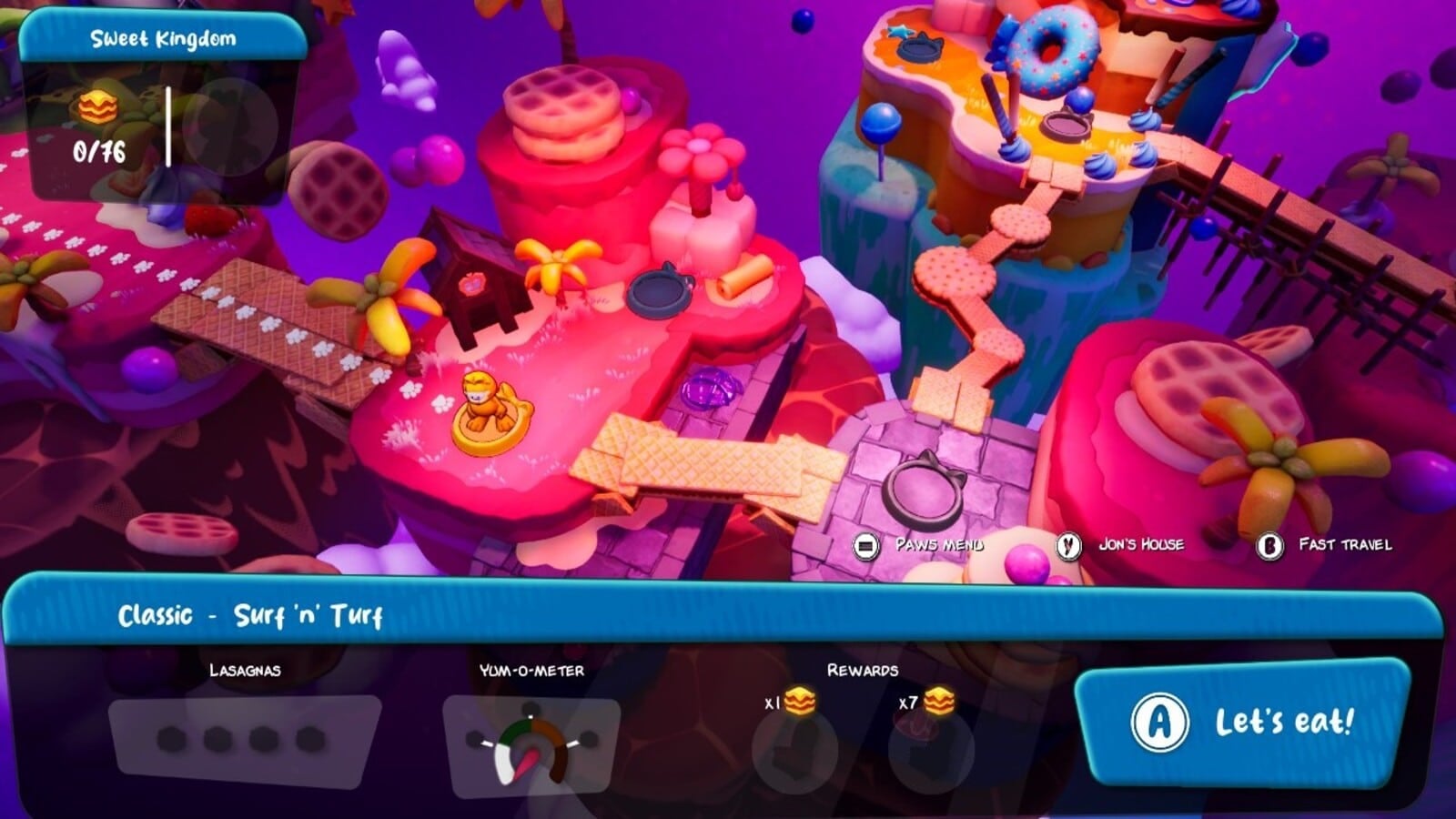
Dreamland is organized through an overworld reminiscent of older Mario games. You complete a stage, move along a path, and gradually unlock new levels before progressing into another themed world.
There are three major worlds: Vegetable Nightmare, Sweet Kingdom, and Barbecue Desert.
Vegetable Nightmare explains why so much of the opening revolves around produce. Farms, barns, cornfields, vegetables, and cheese dominate the early stages. Beating it opens Sweet Kingdom, which immediately trades the farm theme for sweets and treats.
The changes go beyond the scenery.
Vegetable Nightmare throws tomatoes, charging almonds, kernel-shooting corn cobs, and potatoes with expanding ground attacks at Garfield. Once I reached Sweet Kingdom, marshmallows replaced tomatoes as one of the basic enemies, while the cheese used for the Yum-O-Meter gave way to sweet treats.
That makes moving into a new world feel more substantial than simply changing the background behind the same obstacles.
Chef Monday also interrupts the standard stages with more elaborate setups. One section of Vegetable Nightmare turns into a circus-style show where he throws challenges and enemy waves at Garfield.
Despite the short individual stages, there is plenty here for completionists. I spent roughly 15 hours clearing Vegetable Nightmare while finding every lasagna before moving into Sweet Kingdom.
Collecting Lasagna is Actually Fun

Lasagna is naturally the main collectible, and finding it unlocks new furniture for Jon’s house, giving the hunt a tangible reward beyond simply filling a counter.
There is also far more to collect than I initially expected, with each of Dreamland’s three zones packed with lasagna to track down.
More importantly, Garfield – Escape from Monday does not simply scatter identical pickups around each level.
So far, I have encountered three types. Normal lasagnas can simply be grabbed when you find them. Timed lasagnas require Garfield to ground slam a button before racing through a short platforming sequence to reach the prize before time runs out.
Splitting lasagnas are even more involved. Their layers break apart and scatter around part of the stage, forcing you to track down every piece.
That variety turns some collectibles into miniature platforming challenges. Flappy Cat, for example, gave me one of my tougher lasagna hunts.
My biggest complaint is backtracking. Certain stages eventually prevent you from easily returning to earlier areas. Unless you can pull off some questionable platforming shenanigans, missing a lasagna may mean finishing the level and returning for it.
Thankfully, the game remembers what you have already completed. If the Yum-O-Meter is finished and you only missed one lasagna, you can replay the stage, grab it, and leave without repeating everything else.
Since most levels are short, cleanup rarely becomes painful. I would still rather have the freedom to backtrack whenever I realize I missed something.
Time Attack Adds More for Completionists
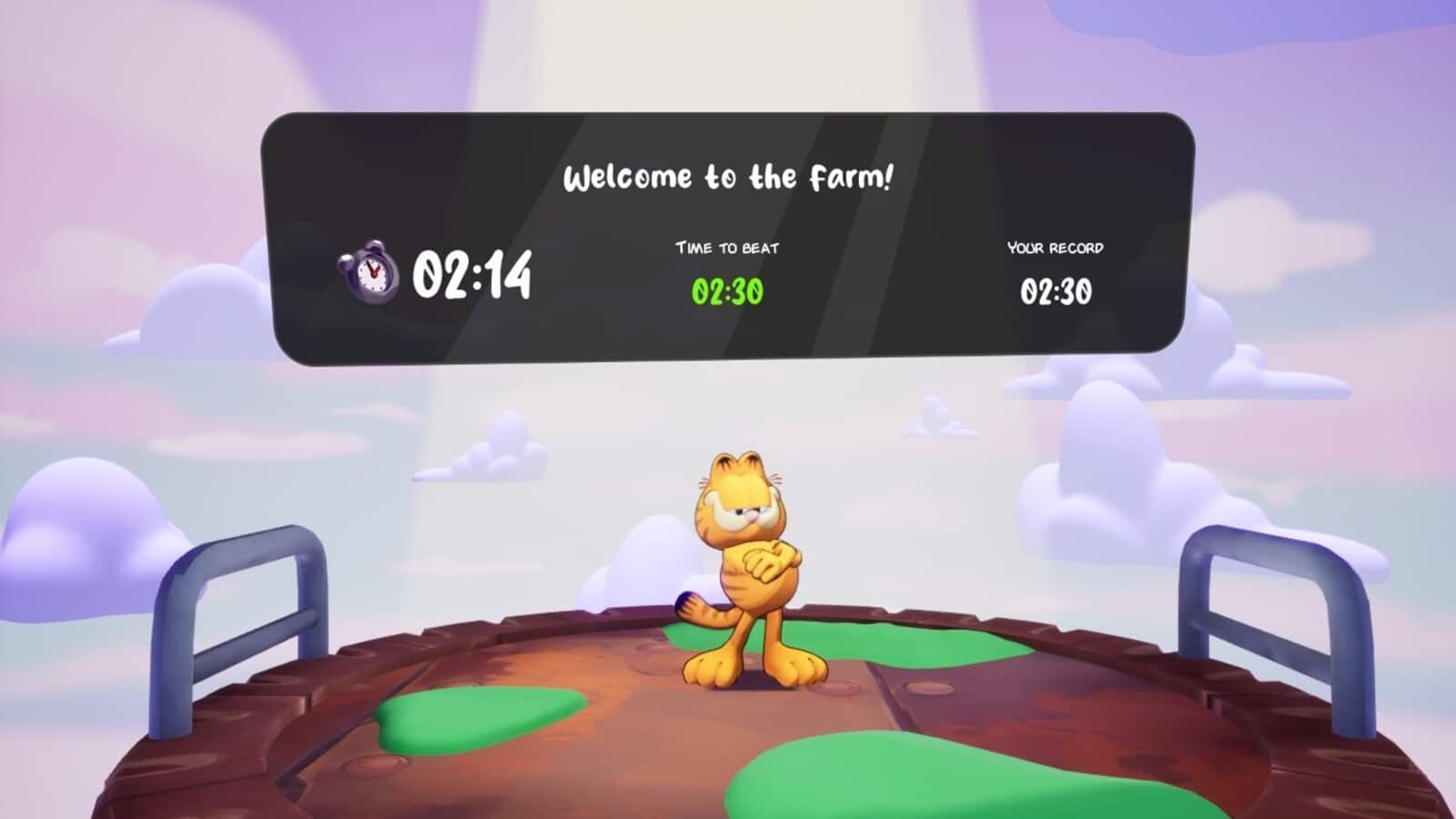
Collectibles are not the only reason to replay a stage.
Each world includes Time Attack versions of its levels with target times to beat. Instead of checking every corner for lasagna, you are suddenly trying to use Garfield’s movement as efficiently as possible and rush to the end.
It is a smart addition because the controls are good enough to support faster play.
The achievements also encourage you to mess around with individual mechanics. Challenges include staying airborne for a certain amount of time, maintaining a roly-poly for a full minute, bouncing off three corn shots in succession, and even crashing into an eggplant while riding another eggplant.
They are goofy little extras, but they fit the game and give completionists reasons to experiment beyond simply clearing every stage.
Garfield Still Feels Like Garfield
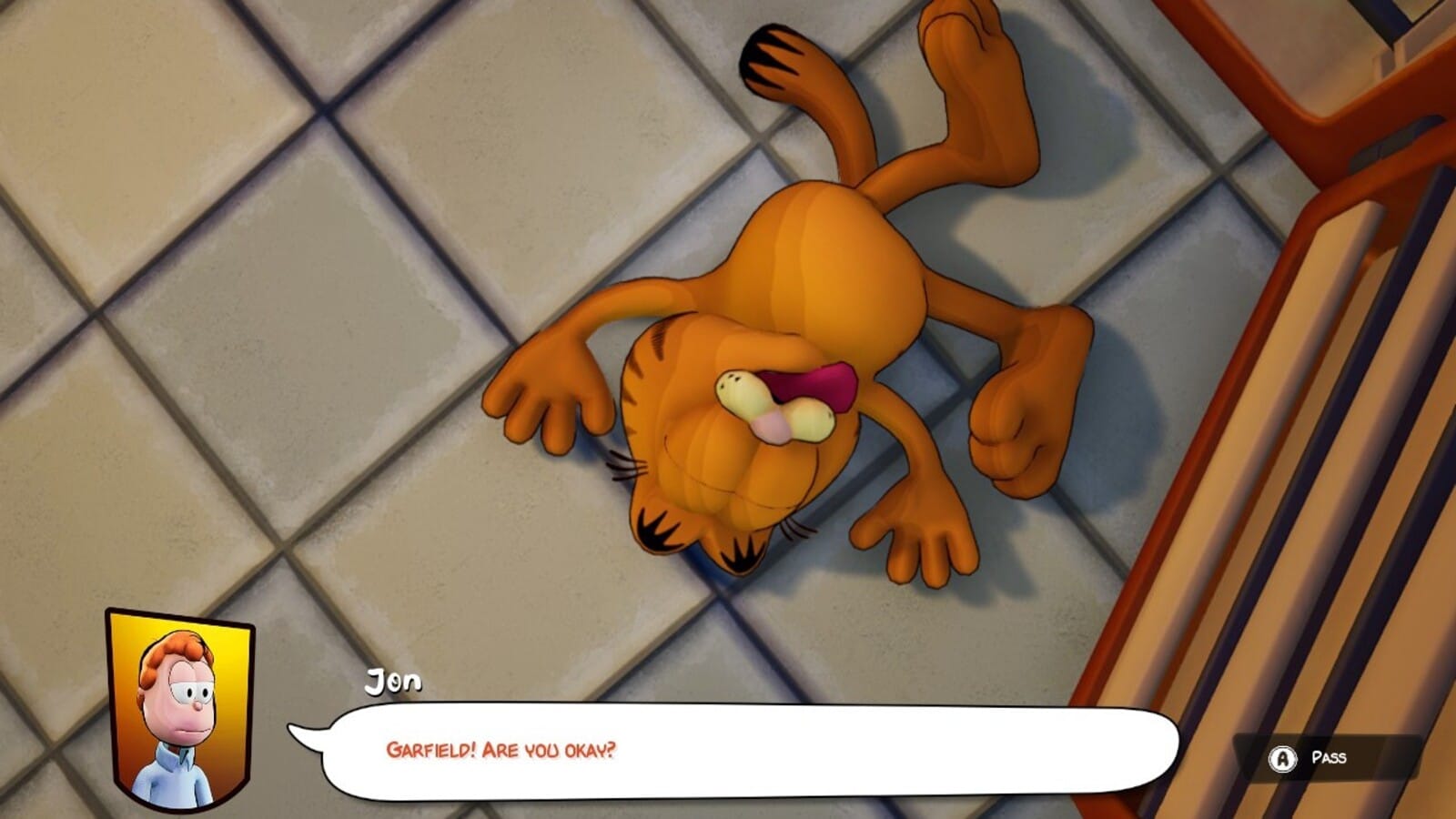
The writing understands its main character.
Garfield regularly breaks the fourth wall and delivers the dry humor you would expect. At one point, he even jokes about the game spending its budget on special effects.
Those moments work because the game does not constantly stop and demand that you laugh. Garfield mostly sounds appropriately unimpressed by whatever ridiculous situation Chef Monday has thrown him into.
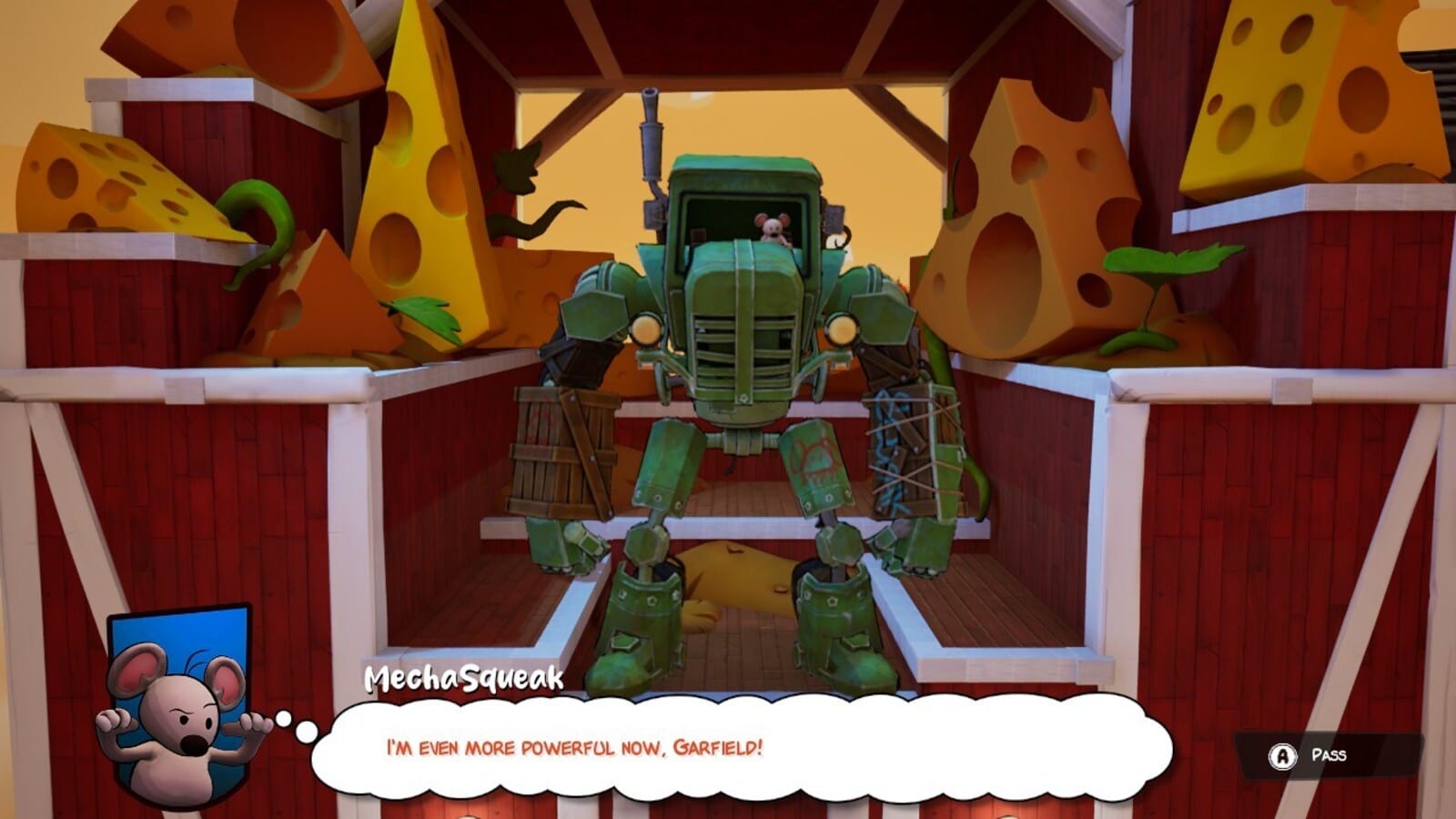
Garfield also runs into familiar faces throughout Dreamland, including Squeak, Nermal, and Odie. Squeak and Nermal are framed as secondary antagonists, while Odie is one of the friends helping Garfield along the way. Chef Monday remains the larger threat tying the three worlds together.
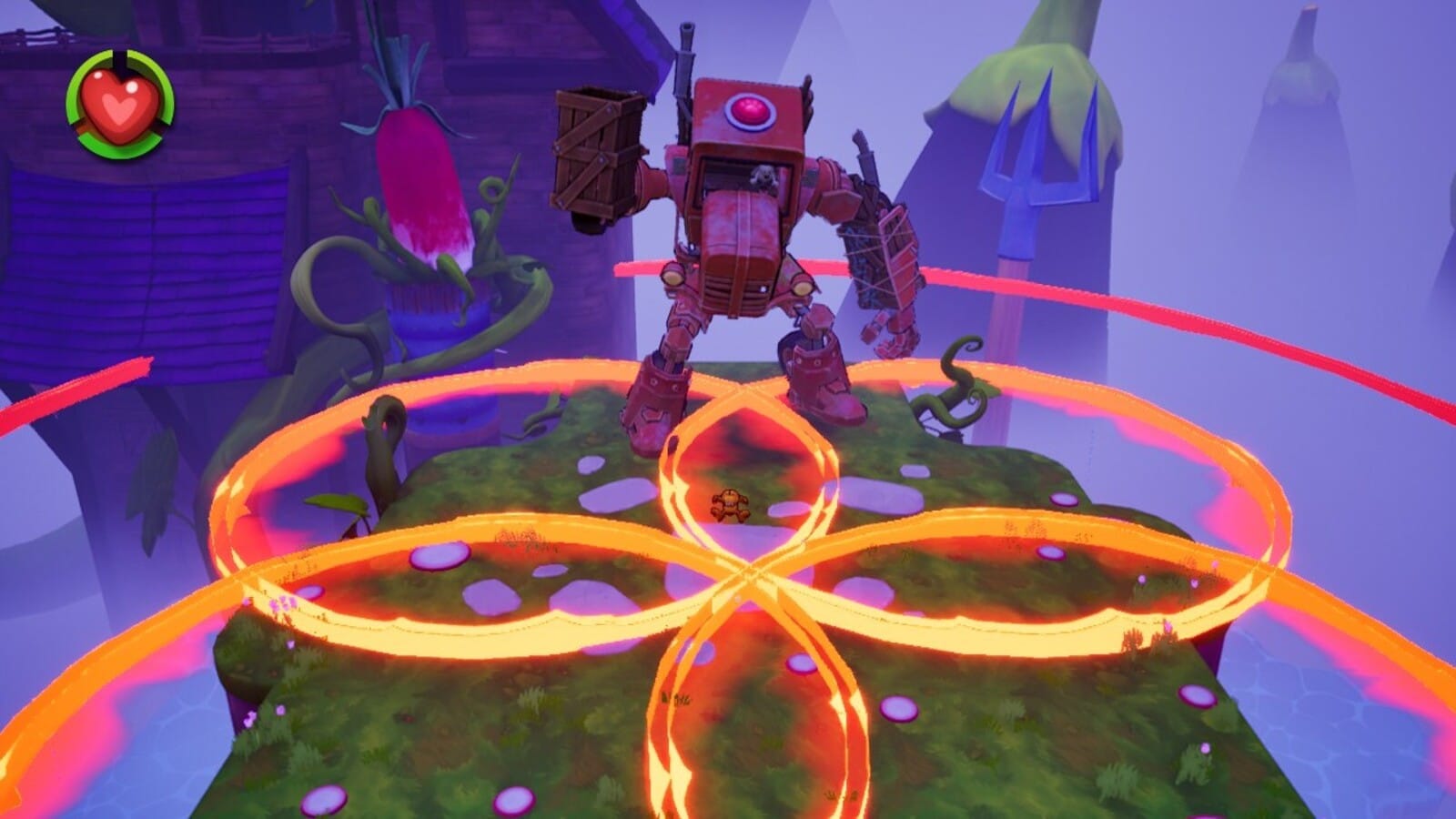
Squeak was the first of those encounters I experienced. His mech battle has Garfield dodging circular bomb explosions until an opening appears. Once the mech is vulnerable, Garfield can knock it down and ground slam the button on top to deal damage.
The fight is easy, but I prefer that approach to simply giving a normal enemy a much larger health bar.
The visual presentation also suits the lighter tone. Garfield – Escape from Monday uses bright, stylized cartoon visuals that remind me of the licensed Nickelodeon-style platformers I grew up playing.
The character animation is less convincing.
Garfield regularly speaks without moving his mouth, while humanoid characters animate their faces without always matching what is being said. It does not ruin anything, but once I noticed it, I kept noticing it.
The upbeat music similarly fits the colorful presentation without being particularly memorable. I eventually found myself lowering the volume while replaying levels outside of cutscenes.
It does the job. It just is not something I expect to be humming afterward.
The Locked Camera is the Real Enemy
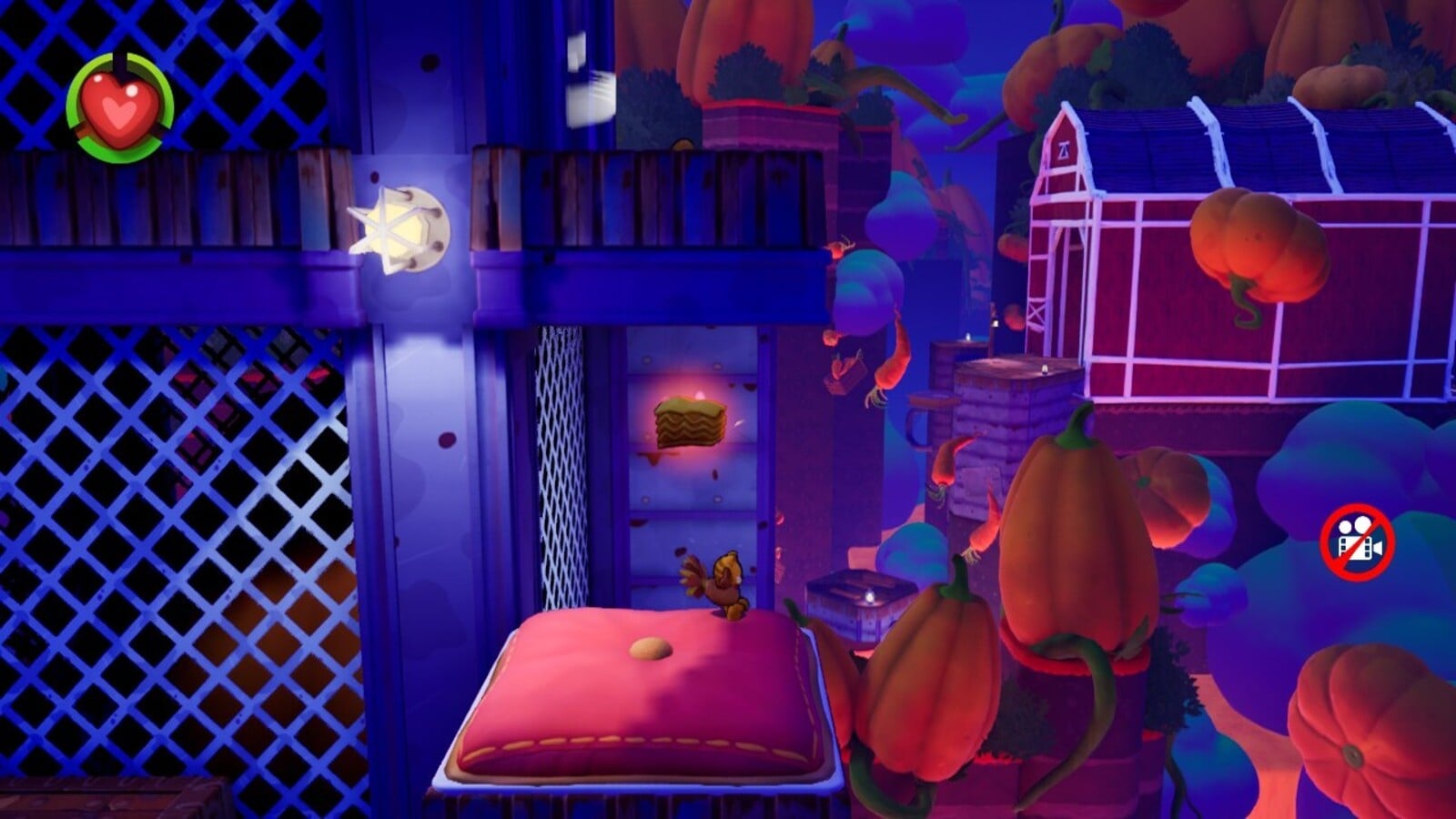
The normal camera works perfectly well. You can rotate around Garfield, reset it behind him, or let it automatically follow.
Then certain sections lock you into a specific perspective.
Sometimes the viewpoint almost seems intended to make a platforming sequence or collectible harder to read. A lasagna might sit near the edge of the frame, or a camera transition can make Garfield’s position harder to judge than the jump itself.
Whether that extra difficulty is intentional or not, I rarely found it rewarding. The platforming already works well when I control the camera, so taking that control away can make straightforward sections unnecessarily frustrating.
It remains my biggest complaint with the game.
Thankfully, Garfield – Escape from Monday rarely punishes you heavily for mistakes. I have never received a traditional game over. If Garfield runs out of lives, he simply returns to a checkpoint with his lives restored, and I have not had to restart an entire stage because of a death.
The game has also been impressively stable. I have not encountered crashes or serious bugs.
There are occasional odd moments. During one circus challenge, the game announced that a new wave had started before the platforms and enemies actually appeared. I spent a few seconds wondering whether something had broken before everything finally loaded into place.
It was awkward, but minor.
Steam Deck is a Great Way to Play
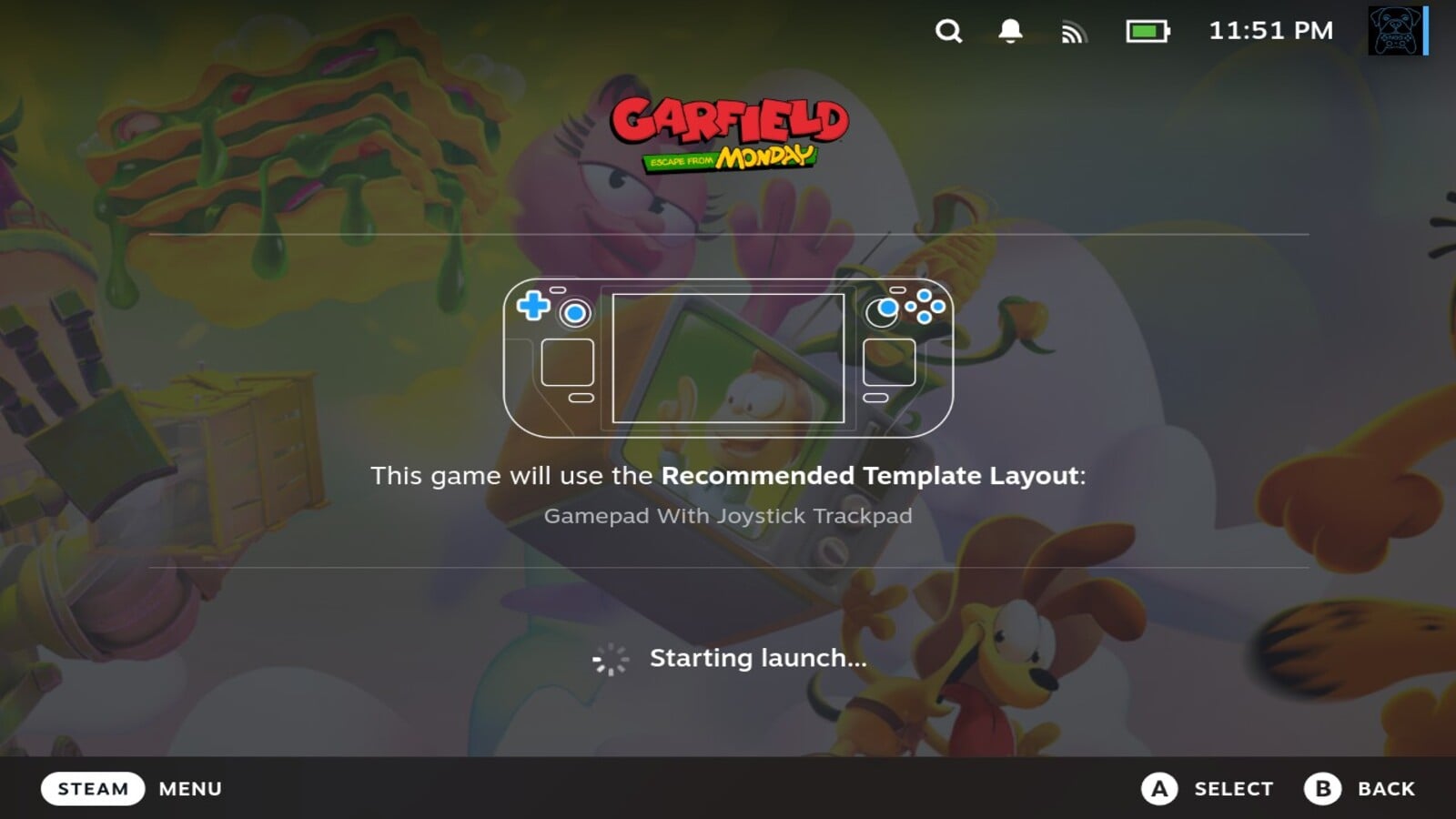
I played most of Garfield – Escape from Monday on Steam Deck, and it fits the handheld extremely well.
Controller support feels natural, performance has remained solid, and battery life has been good enough for long sessions.
The shorter level structure is particularly well suited to handheld play. I can clear a stage, hunt for a missing lasagna, or attempt a Time Attack without committing to a long session.
Considering how much time completionists can spend clearing every collectible, that flexibility is useful.
Is Garfield – Escape from Monday Worth Playing?
Garfield – Escape from Monday gets the most important part of a 3D platformer right: moving around is fun. Garfield’s jumps, dash, wall slide, ground slam, and special suits feel responsive, while Dreamland’s changing worlds give the adventure enough variety to keep the platforming from becoming repetitive.
The collectathon side works just as well. Hunting lasagna gives me a reason to explore, Time Attack adds replay value, and forgiving checkpoints prevent mistakes from wasting much time. I just wish the camera followed that same philosophy, because the forced viewpoints create some of the game’s most frustrating moments.
It is not especially difficult, and parts of the presentation are rough around the edges, but I have consistently had fun playing it. For anyone who enjoys relaxed 3D platformers and hunting down collectibles, Garfield – Escape from Monday proves even the world’s laziest cat can carry a surprisingly great 3D platformer.