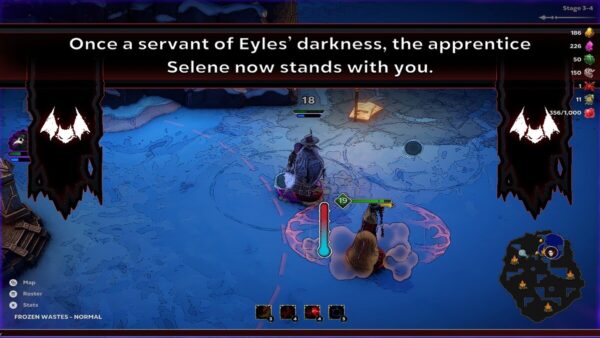


In this Night Swarm review, I break down how its vampiric horde-slaying, deep relic builds, and satisfying meta progression hold up after about 40 hours of play. Night Swarm is a vampire-themed roguelite RPG bullet heaven survivor-like from Fubu Games, published on PC by Mad Mushroom and Gamersky Games, with console versions handled by NAISU. It looks at first glance like another Vampire Survivors-style auto-shooter, but it layers on talent trees, castle upgrades, armor crafting, and companions until your runs feel closer to a full RPG build than a simple time-waster.
That ambition is what makes Night Swarm interesting to review. Some of its systems come together in really satisfying ways, like my go-to freeze build that used Mr Coftopus, Sanguine Pool, and every status effect talent I could grab so enemies instantly froze the moment they touched the pool. Other ideas get in their own way, with strict relic minimums, RNG-heavy upgrades, and repetitive paths that can make later runs feel more grindy than they should. This review is all about where Night Swarm sticks the landing and where its big ideas start to trip over each other.
The Story

In Night Swarm, you play as Roderic, a young vampire lord tasked with cutting through hordes of enemies cursed by werebeasts while growing your dark little empire. You push your kingdom’s power higher and higher until you basically become the ultimate monster on the map.
The overall plot is pretty generic dark fantasy, and it never really shocked me, but the NPCs help carry it. There are plenty of fun characters to recruit, talk to, and exploit on your rise to power, and after a while I was way more invested in my growing roster and castle than in the big-picture story about corruption.
Voice Acting, Graphics, and Music
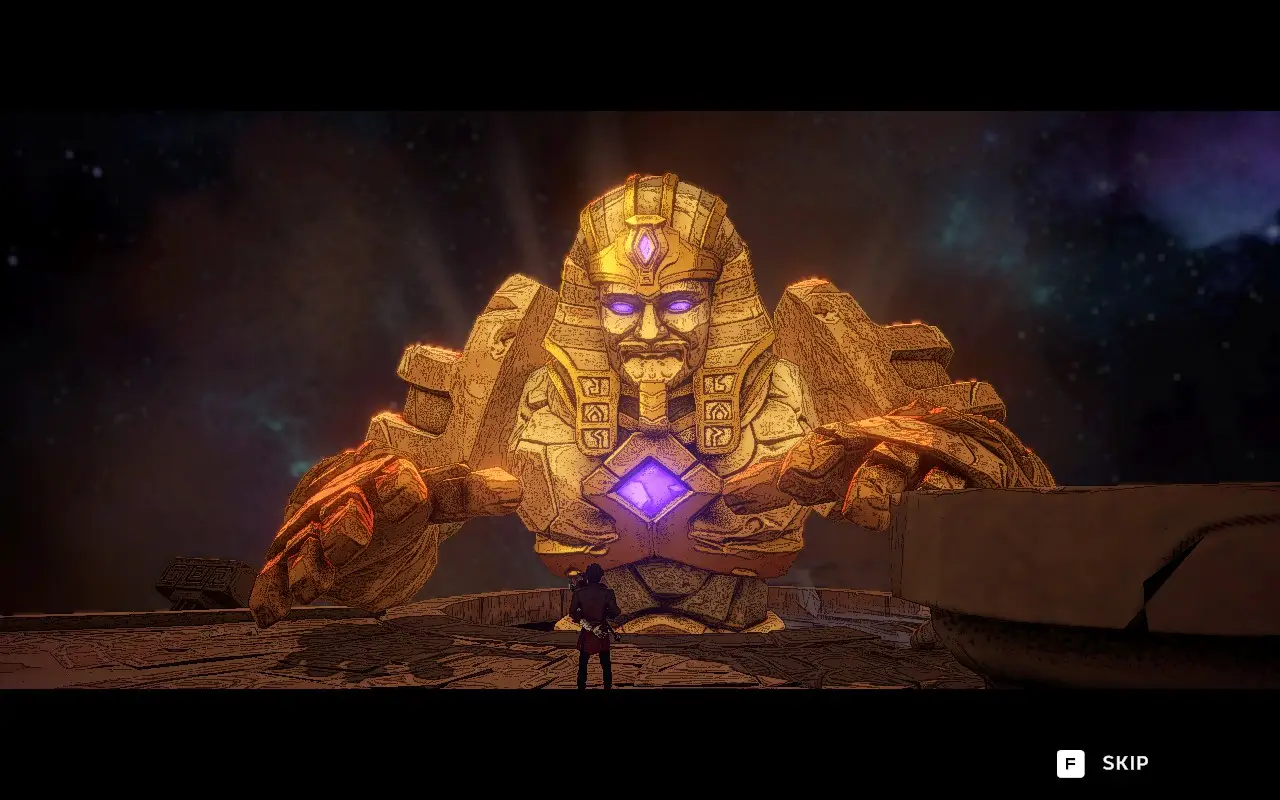
Night Swarm’s presentation does a lot of heavy lifting for the overall experience. From the moment you drop into a run, the voice acting, stylized visuals, and loud screen-filling effects all work together to sell the fantasy of being an upcoming vampire lord. It is not the most technically impressive game out there, but the way it sounds and looks moment to moment gives it a strong identity and helps keep the grind from feeling flat, at least for the first few dozen hours.
Voice Acting
Night Swarm is fully voice-acted, which gives the game more personality than a lot of survivor-likes. Each character has a distinct vibe and, while the performances aren’t mind-blowing, they land in a nice, sweet spot. They sell the tone without tipping over into full camp, which fits the game’s mix of grim setting and goofy over-the-top carnage.
Graphics
Night Swarm uses a gritty cel-shaded 3D style with an isometric camera, and it works really well for the survivor-like genre. The comic-book look keeps enemies and attack effects readable at a glance, and even after dozens of hours, I still liked watching waves of werebeasts pop under all the particle spam.
That said, the screen can get very busy late in a run. Projectiles, spell effects, and mobs can blend together, especially in boss fights. Being able to lower the opacity of certain effects is a lifesaver. After around 40 hours, I basically considered that tweak mandatory for bosses, since attack indicators can get lost in the chaos and lead to cheap deaths if you stick with the default settings.
Music
The soundtrack starts strong and fits the vibe, but it loops often and can wear out its welcome if you grind for hours. After a while, especially once I got deeper into my 40 hours with the game, I caught myself muting the music during runs and only turning the volume back up for character interactions and story moments.
The Relic System and The Hunter’s Doctrine
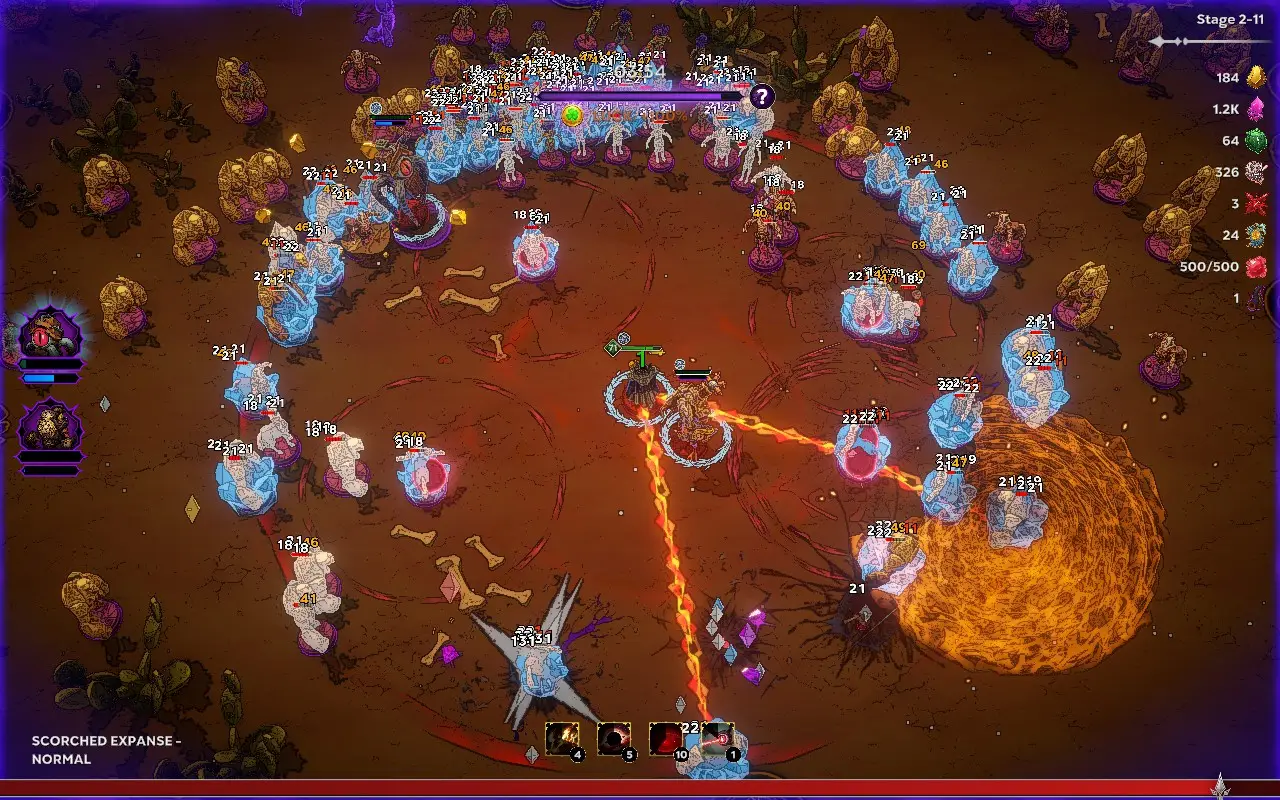
The relic system is the heart of this Night Swarm review, and after around 40 hours it is where I had some of my best runs and some of my biggest frustrations.
Active Relics
Active Relics are your main attacks in Night Swarm. You start with a basic set and unlock more by completing objectives. You can equip up to four Active Relics at once and upgrade stats like damage, range, speed, and cooldown. Once two Active Relics hit level 10, you can fuse them into something stronger, which is where a lot of the relic system really opens up.
On paper, it is great, but there is a catch. You are required to run with at least 7 Active and 7 Passive Relics, for a total of at least 14. With 27 Active and 21 Passive Relics in the pool, that does help narrow what shows up when you level, but the RNG can still be rough. There were plenty of runs where I could not finish the fusions I wanted because the right relic never appeared or showed up way too late on higher difficulties.
Fusible Relics
Fusible Relics are powerful attacks created by combining specific pairs of level 10 Active Relics. There are currently 13 of these in Night Swarm. When you fuse two relics, you free up a relic slot again, so fusing twice in a run opens two more slots for fresh attacks and more experimentation.
Chasing these fusions is one of the most fun parts of the relic system, but the forced relic minimum sometimes pushes you into picking relics you do not actually want, just to keep the run legal. It can make the system feel restrictive instead of empowering when a perfect fusion path gets derailed by bad rolls.
Passive Relics
Passive Relics do exactly what you expect. They give you bonuses like more max health, movement speed, health regeneration, and so on. You unlock and level them alongside Active Relics as you gain levels during a run. They are not as flashy as the attacks, but stacking the right passives can make or break a build on Nightmare or Hell.
Artifacts
Artifacts are extra power spikes that sit on top of your relic build. You unlock them by completing specific objectives, like clearing a stage with less than 15 HP left. During runs, you can buy Artifacts from Totems using gold, and they can push a strong build into completely broken territory if you line them up correctly.
The Hunter’s Doctrine
The Hunter’s Doctrine is Night Swarm’s long-term talent tree system. There are three categories of talents: Life, Damage, and Status Effects.
Life talents boost max health, life regeneration, and even unlock a free revive that lets you continue a run after death. Damage talents increase overall damage, boss damage, and damage against enemies affected by debuffs. Status talents increase your chances to freeze, burn, or otherwise debuff enemies, and also include things like increased experience gain. You buy talents with a currency earned from killing enemies, completing quests, and other activities between runs.
This is also where some of the coolest builds come together. My favorite setup after about 40 hours was a freeze build that stacked every status effect talent I could, used Sanguine Pool as an Active Relic, and paired it with the Mr Coftopus companion. Once that combo was online, anything that touched the pool basically froze on the spot, and even Hell difficulty runs started to feel more like I was styling on enemies than just surviving.
At first glance, the Hunter’s Doctrine looks overwhelming, but once you start clearing the four biomes you earn enough points to unlock a big chunk of it fairly quickly. Early on I enjoyed experimenting with different paths. For example, I liked going heavy into the health tree for the frost biome and leaning into full damage for the forest biome. Eventually I had almost everything maxed out and did not need to think about it much anymore, but the nice part is that you can reset your points for free as often as you want, so the game encourages you to keep testing weird setups to see what clicks.
The Levels and Difficulty Settings
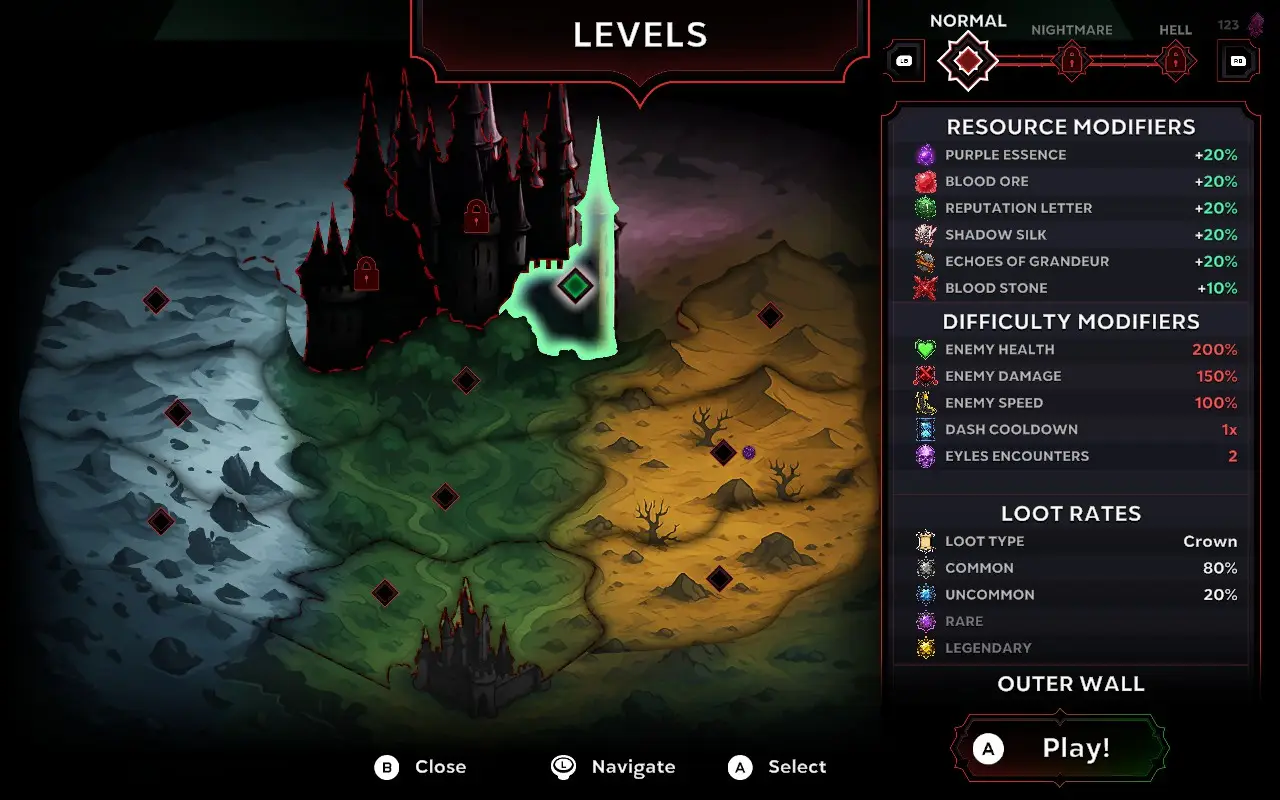
The level structure and difficulty curve are another big pillar of this Night Swarm review. Night Swarm has four main levels, each set in a different biome: frozen tundra, woodland, desert, and castle.
Along the way, the path branches into different types of encounters. One route might let you recruit companions, another might focus on farming crafting materials or extra currency. This gives you some control over what you are working toward in a run instead of just hoping for good drops.
There are three difficulty settings: Normal, Nightmare, and Hell. You start on Normal, unlock Nightmare by beating a level, then Hell after beating it on Nightmare. Each jump in difficulty increases both the challenge and the resource gains, so pushing into higher tiers is stressful but rewarding.
There is a decent amount of variety in the biomes and enemy types, but the basic structure of each level is similar enough that, after a bunch of hours, the runs can start to blur together. If you binge Night Swarm, you will probably feel that repetition.
Companions
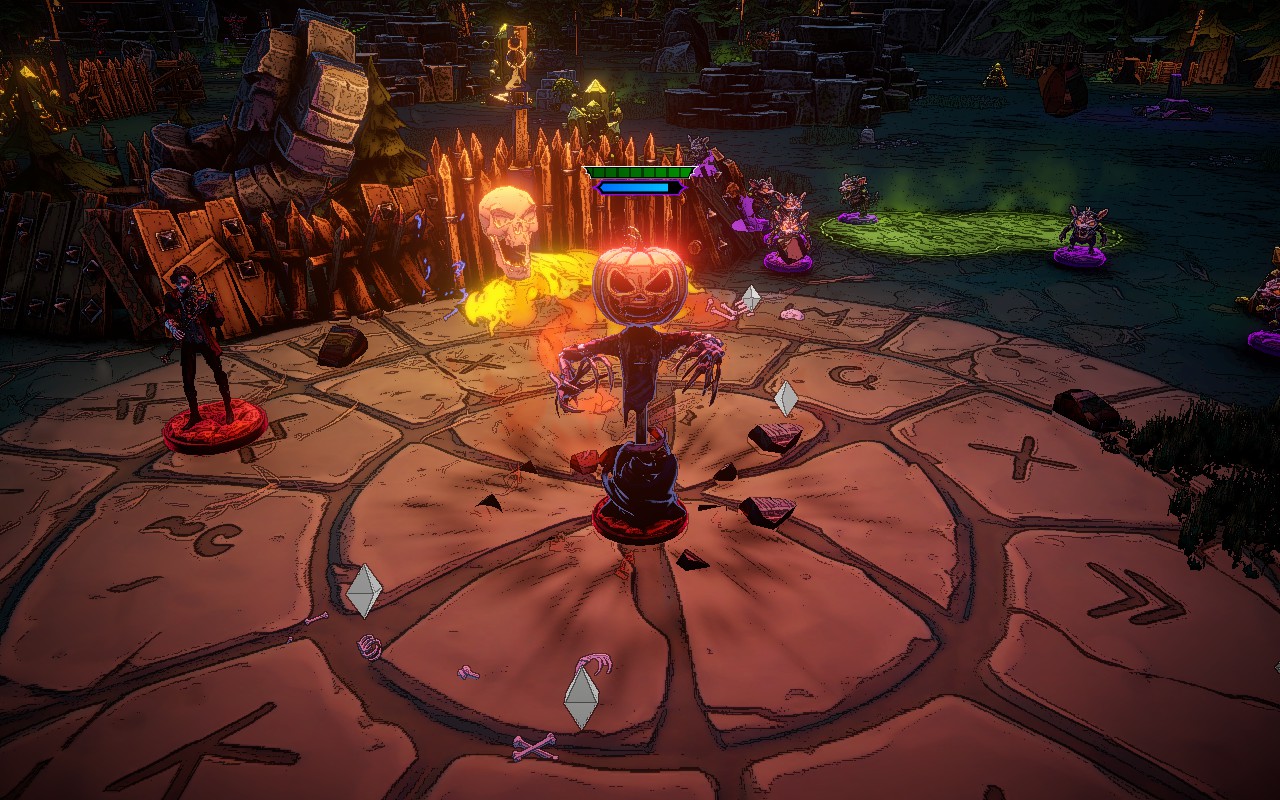
Companions are one of the more interesting layers in Night Swarm’s buildcraft. There are 10 different companions, unlocked by earning reputation through quests. Each one comes with a unique active ability and a passive effect that supports whatever build you are trying to pull together.
Outside of runs, you need to have at least 5 companions equipped in your pool, which determines who can actually show up as options during a run. On top of that, companions use a banish-style system so you can push out ones you do not care about and improve the odds of seeing your favorites.
To actually take a companion into a run, you need to reach a specific stage in a level. There, you choose one of three options, which adds a nice draft-style decision point to your route planning and can nudge your build in a new direction. You can also stack multiple companions at once. The most I had at one time was three, and that felt strong without completely breaking the game.
After around 40 hours, I naturally gravitated toward companions that played into status builds. My favorite setup was a freeze build that used Mr Coftopus together with the Sanguine Pool relic and a full stack of status effect talents. Once that engine was running, enemies would hit the pool and freeze almost instantly, which made late-game crowds and bosses feel much more manageable.
Not every companion is equally useful, and you will naturally gravitate toward the ones that fit your favorite setups. They are not so powerful that they trivialize high-level content, but they absolutely can be the difference between barely scraping by and comfortably clearing Hell difficulty.
Castle Upgrades and Armor
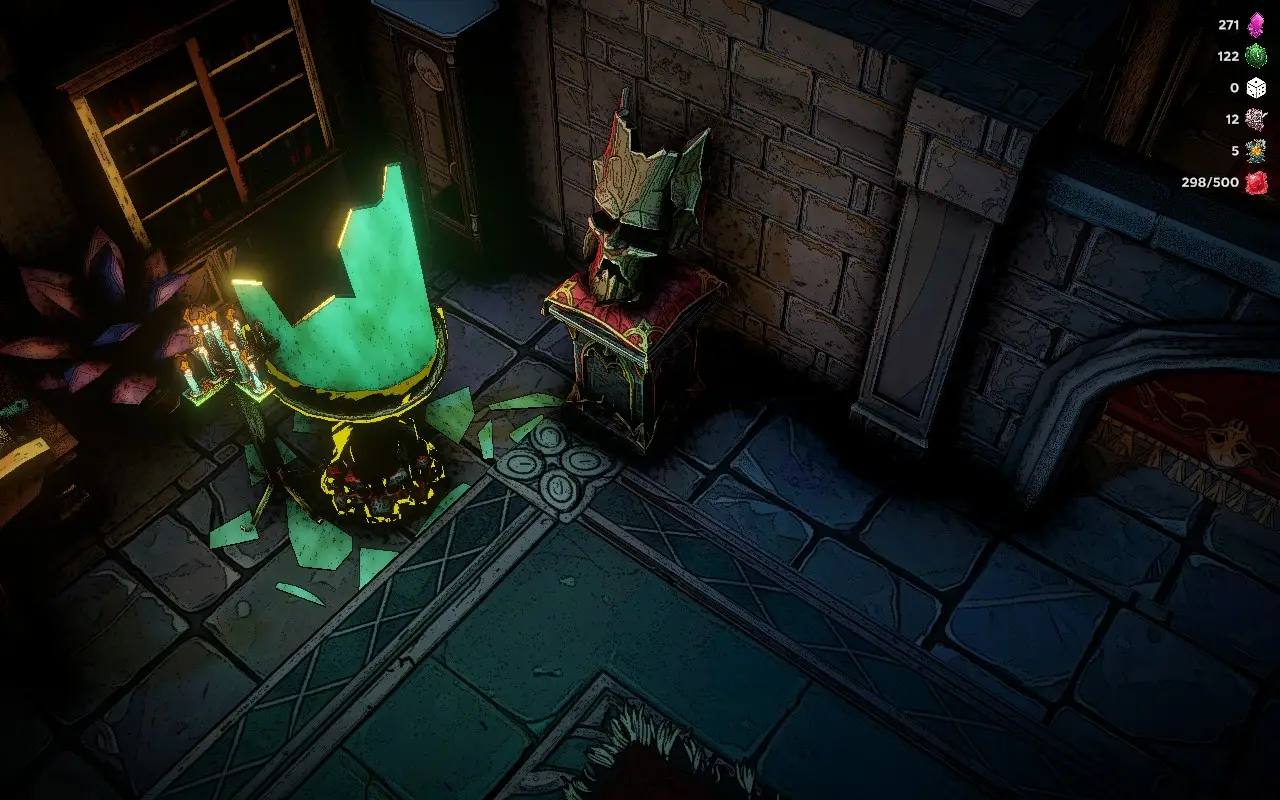
Outside of runs, Night Swarm lets you upgrade your castle hub, and this ended up being one of my favorite side systems. Castle upgrades change the look of your base and provide passive bonuses that carry into your runs. For example, upgrading the curtains boosts your block chance, giving you a small but noticeable edge in tougher stages. It sounds minor on paper, but it makes the hub feel more alive and gives you another meta-progression track to chase.
Visually upgrading the castle is a nice touch, especially since you spend a lot of time there between attempts. Whenever I hit a difficulty wall or just needed a break from pushing higher levels, I found myself relaxing by dumping resources into the castle and planning my next round of upgrades.
You can also craft four pieces of armor using blueprints of different rarities. Roderic can equip a crown, staff, cloak, and boots, each providing stat boosts and buffs that tie directly into your relic builds. Armor is a big power spike and adds some cool visual flair to Roderic, but it comes with a grind. You need a lot of materials to craft and upgrade higher-rarity pieces, and armor totems felt like a bad deal most of the time. They usually spat out common recipes, which are not very exciting once you have started to collect better ones. In practice, I preferred to spend my gold on Relics and Artifacts instead of gambling on armor drops.
Steam Deck Performance
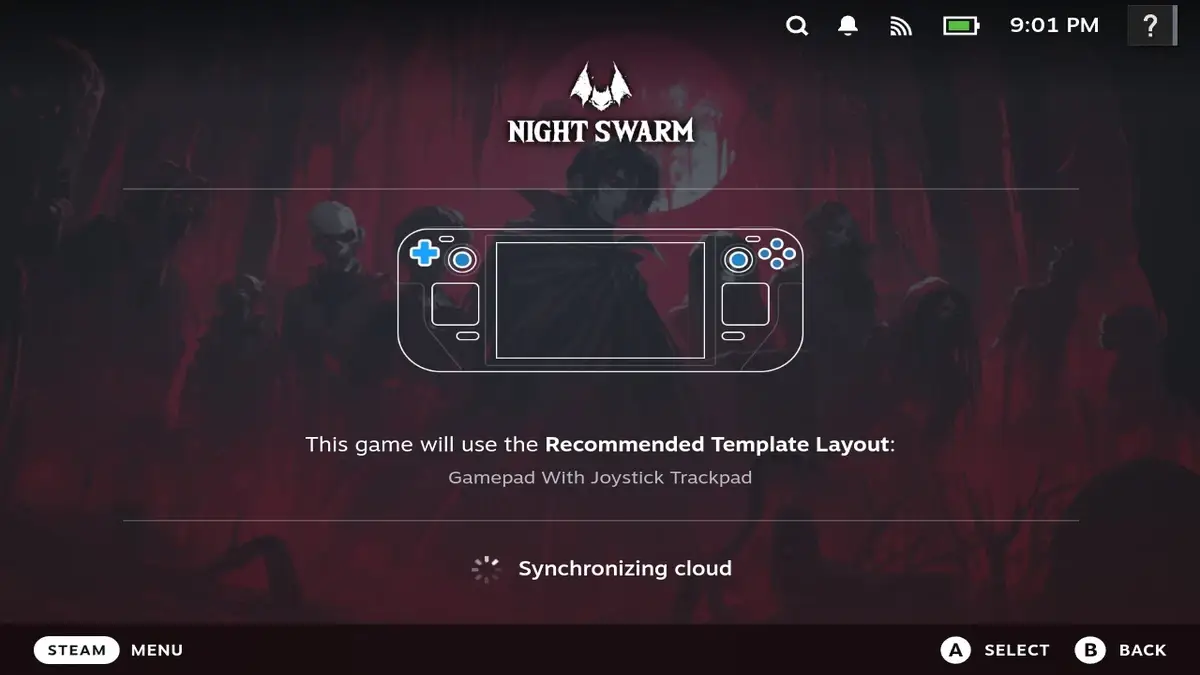
Steam Deck performance is a surprisingly strong part of this Night Swarm review, and I am happy to report that it runs great on Steam Deck. I did not run into stutters, major frame drops, or crashes, even when the screen was clogged with enemies and projectiles near the end of a run. For a game that regularly turns into a glowing pile of effects and bodies, it feels surprisingly solid on handheld hardware.
The controls translate well to a controller layout too. Moving and dodging on the sticks feels responsive, and the default button mapping made sense right away. Managing relics, talents, and companions in the menus is simple enough that I never felt like I needed a mouse and keyboard to comfortably tweak builds between runs.
Combined with the short, run-based structure, that makes Night Swarm a strong fit for Steam Deck. It is easy to knock out a quick run on the couch or in bed and still feel like you are making progress on relics, companions, or castle upgrades, which is exactly what I want from a portable survivor-like.
Final Take — Is Night Swarm Worth Playing?

For this Night Swarm review, I put in roughly 40 hours, including a lot of time on Steam Deck, and I would say yes, it is worth playing if you are into survivor-likes and want something with a bit more structure and progression wrapped around the usual horde survival loop.
The relic and talent systems are fun to build around, even if the forced relic minimum and RNG can make some runs feel inconsistent or frustrating. Once you learn to adapt and draft around what the game gives you, the moment-to-moment gameplay settles into a satisfying rhythm.
Strong voice acting, solid music (at least in shorter sessions), crunchy sound effects, and a surprisingly cozy castle hub give Night Swarm more personality than you might expect at first glance. Combined with good Steam Deck performance and plenty of meta-progression, it is an easy recommendation if you are looking for a new survivor-like to sink hours into, and this Night Swarm review should give you a good idea of whether its quirks will click for you.