

Double Fine Productions is back with something small, strange, and intensely vibe-forward. Keeper (published by Xbox Game Studios) is a third-person adventure where you play as a weathered lighthouse. It has no business moving around. Somehow, it does, and it works. Directed by Lee Petty, this Keeper Review is about a game that cares more about mood than mastery.
You are not here for long dialogue trees. You are not getting a lore dump every five minutes. Keeper commits to visual storytelling and steady forward momentum. When it hits, it feels genuinely enchanting. It reminded me of the surreal worlds I used to daydream about in older games. When it misses, you can see the scaffolding. Interactions are simple. Puzzles are barely there. The camera can turn basic movement into a fight.
If you love playable art gallery games, this Keeper Review lands in a good place. It has real magic if you meet it halfway. If you want mechanics with teeth, you might admire the scenery while waiting for the game to push back.
Story and Characters
A story that refuses to explain itself
Keeper’s story is intentionally hands-off. It does not stop to explain the world. It does not spell out who everyone is. It also does not tell you what it all means. The interpretation is yours to build.
That approach works because the tone is confident. It gives you emotional direction without spelling it out. Expect curiosity, warmth, and that childlike sense of awe. It feels like exploring somewhere you should not be.
Cozy wonder with a spooky edge
There is also a faint unease running through the island. Some moments lean into creepy imagery. At times, it feels like something is spreading or twisting the world. It never goes full horror, though. It reads more like a spooky storybook than anything mean-spirited.
Twig and the quiet companionship
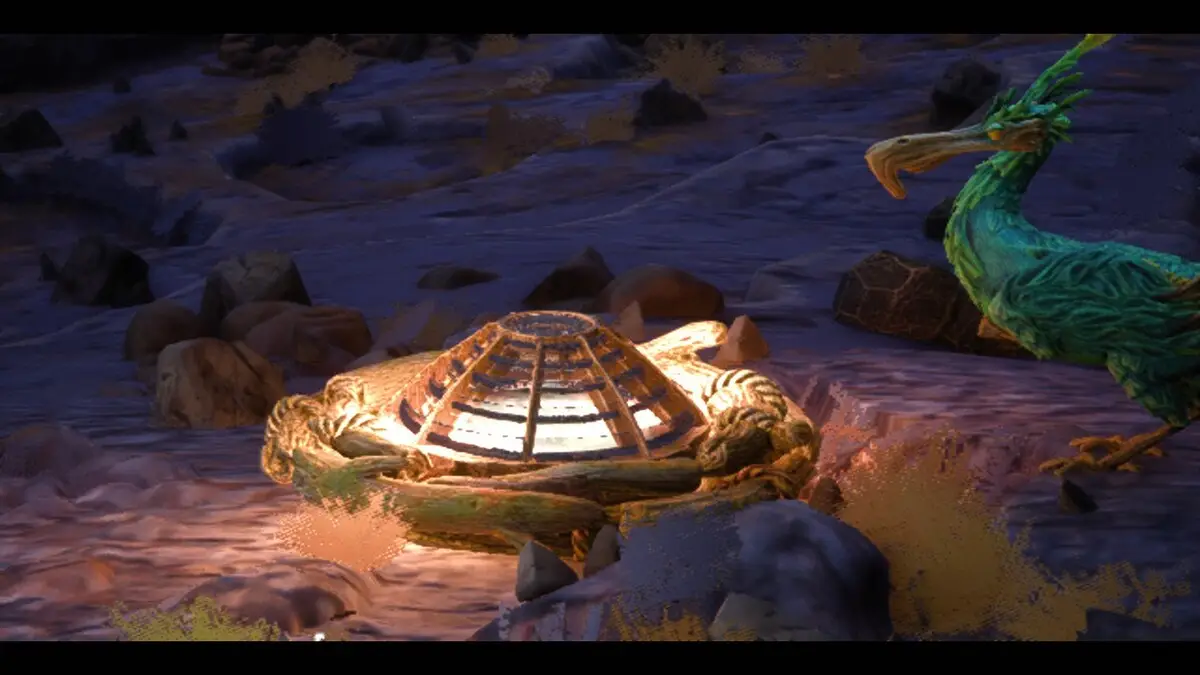
Your main companion is a spirited seabird named Twig. The relationship is where most of the character work sits. This is not a party-based adventure with constant chatter. Instead, it is body language and small gestures. Simple cooperation does the heavy lifting.
Achievements as story breadcrumbs
One clever touch I want to call out in this Keeper Review is how much context lives in the achievements. If you poke around and do a little optional exploring, the achievement names and unlock moments can feel like extra narrative notes. They do not explain everything, but they add texture. It is a neat way to reward curiosity without turning the game into a wall of text.
The tradeoff: thin narrative over a long walk
The biggest downside is how light the narrative feels over time. Keeper runs roughly 5 to 6 hours. I liked that it didn’t bloat into a longer game. Still, it can feel like a whisper of a plot stretched across a lot of walking. This Keeper Review comes down to how much you value mood over momentum.
Music, Sound Effects, and Visuals

The real reason to play
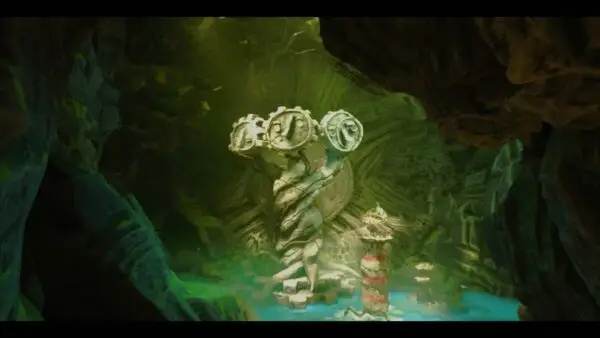
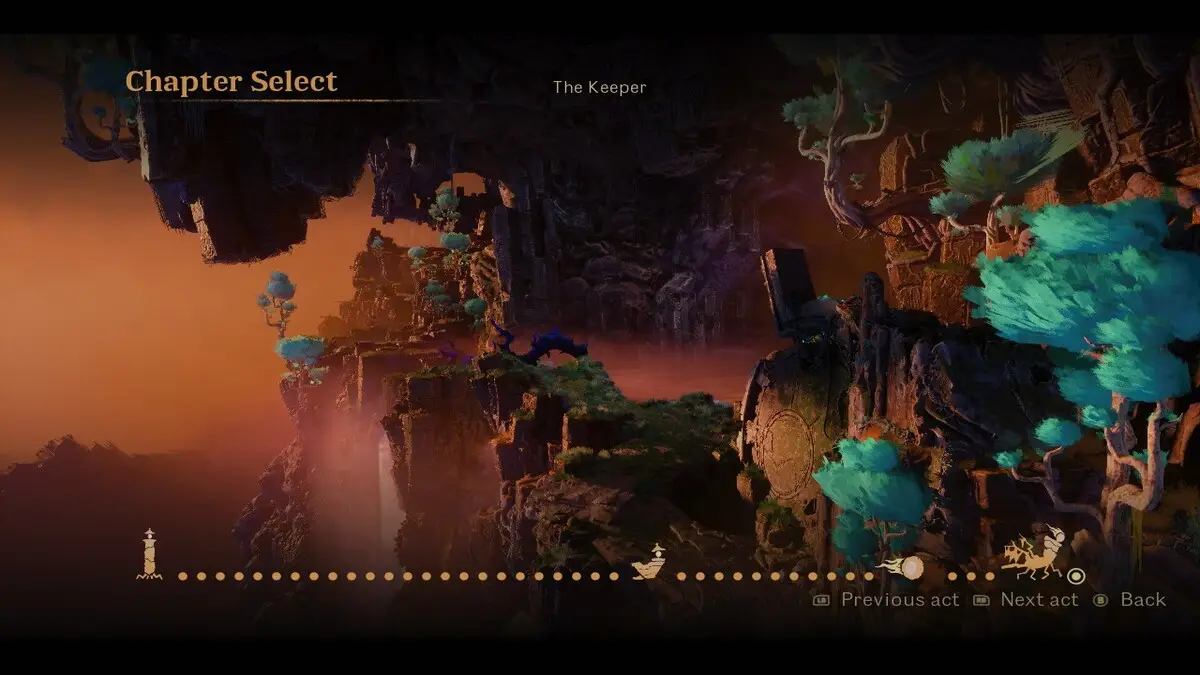
This is where Keeper earns its keep. The game is gorgeous in that unmistakable Double Fine way. It is imaginative and slightly off-kilter. The silhouettes and color choices feel designed to hit emotion first. It is the kind of world that makes you stop and look around. Not because you are hunting collectibles. Because the environment is the reward.
A museum you can explore
The art direction carries the game more than the plot does. Areas feel like curated exhibits. They also ramp up in strangeness as you go. Even when interaction is minimal, the presentation keeps pulling you forward. If you can enjoy a game like you would enjoy wandering a museum, Keeper is in that lane.
The downside is that it also reinforces how minimal the main story delivery is. If you never engage with that layer, the plot can feel even thinner. If you do, it helps the journey feel a bit more intentional.
Sound design that sells the island
The audio work matters just as much. The soundscape quietly sells the island as a living place. Environmental noises add texture. Small cues add presence.
The soundtrack is a standout, too. It does not try to dominate every scene. It supports the mood and nudges your emotions. It is one of the most memorable parts of the whole experience, and a big reason this Keeper Review stays positive overall.
Gameplay
A walking sim at heart
Keeper is an adventure game, but it leans hard into walking-simulator territory. The core loop is simple. You explore, move forward, and interact when something looks usable. You also solve straightforward obstacles along the way.
Puzzles that barely slow you down
There are puzzles, technically. Most do not ask much from you. They feel like pace-setters. They exist to make you pause before the next vista opens up. When I got stuck, it was usually on me. I missed a prompt. I ignored the intended route. I pushed the wrong thing too long.
Exploration matters more than mechanics
Keeper does not ask much from you mechanically, but it does reward attention. Wandering off the path, checking odd corners, and interacting with the environment can pay off. Sometimes it is a visual moment. Sometimes it is an achievement that adds a tiny story beat. In this Keeper Review, that ended up being one of the best reasons to slow down instead of sprinting to the next area.
Engagement fades instead of grows
My bigger issue is how little the gameplay evolves. The friction stays low. The interaction stays light. In some ways, the later sections ask even less of you. That is fine if you are here purely for atmosphere. It is rough if you keep waiting for systems to open up. That frustration sits at the center of this Keeper Review.
The camera is an unforced problem
Then there is the camera. I am not asking for cinematic perfection. Still, I fought it more than I wanted to. Mouse controls, especially, can feel awkward. That is frustrating in a game built around movement and looking. Camera feel matters here, and it sometimes pulls you out of the mood.
Variety shows up, but it never changes the loop
There are small flashes of variety, like new ways to get around and a bit of light platforming, but it never changes how the game feels to play. Most of the time, gameplay exists to carry you from one stunning scene to the next. If you’re here for the art and music, it delivers. If you’re hoping to be tested, it’s more like a gorgeous walk that rarely asks anything of you.
Steam Deck Performance
I played Keeper entirely on the Steam Deck. The good news is that it is playable there. When everything behaves, it is a great couch game. It also fits perfectly into short, relaxed sessions.
The bad news is stability. I hit multiple hard crashes. It was not just the game that went down. The Steam Deck itself shut off and needed a restart. I also saw stutters and occasional freezing. When it ran well, I loved the experience. When it did not, it was hard to ignore. If you are searching for “Keeper Review Steam Deck,” this is the one warning I would put in bold on your checklist.
Final Verdict – Is Keeper Worth Playing
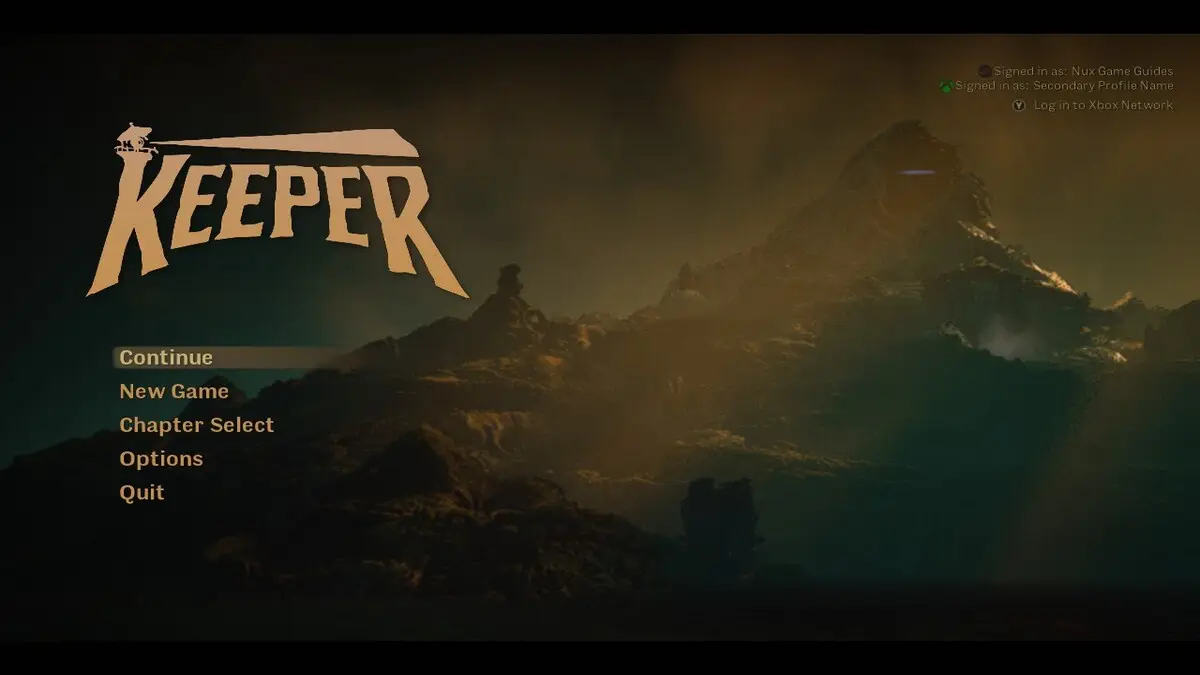
This Keeper Review comes down to whether you want atmosphere or engagement. Keeper is imaginative and gorgeous, with a soundtrack that lifts nearly every scene. The tradeoff is that it barely pushes back. The challenge is minimal, and the camera can be more frustrating than it should be in a game built around movement and looking.
If you want a surreal weekend adventure that plays like interactive art, Keeper is worth checking out, especially if you already enjoy walking sims. If you’re after deeper mechanics, denser storytelling, or any real friction, you may end up admiring the vistas while waiting for the game to give you more to do. One bright spot is the achievements, which add extra context and help the story land better when you lean into them. In the end, Keeper is best approached as a mood piece: take it slow, soak it in, and you’ll get the most out of what it does well.